About
me
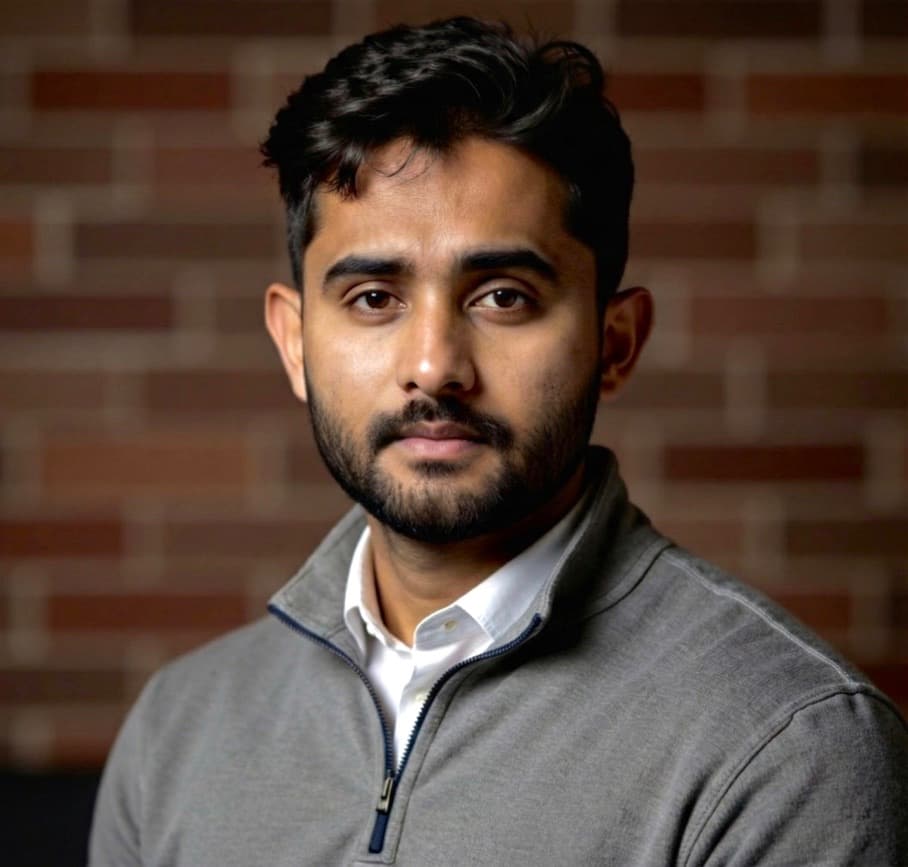
PM by title, designer by instinct. Co-Founder at Aatram, a consumer iOS app live on the App Store. Solo designer + engineer behind FrictionLens, a full-stack AI review analyzer. Before that, grew a seed-stage B2B handloom marketplace from 20 to 75+ vendors and doubled GMV. Just graduated with my M.S. in Management of Technology from Arizona State University, 3.7 GPA.
The throughline: I find the problem worth solving, then ship the fix. End-to-end. Product, design, brand, and increasingly the code.
By the numbers
18%
Aatram App Store CVR
240
Organic downloads
2×
Monthly GMV at IKT
20 → 75+
Vendors at IKT
25 → 40%
Gross margin at IKT
3.7
M.S. GPA · ASU
What I believe in
“Empathy scales better than features”
I've interviewed artisans who'd never touched a smartphone. Watching them struggle with a 3-day onboarding flow changed what 'simple UX' meant forever. Deep user understanding is the only sustainable product advantage.
“Data informs, context decides”
I built the seller analytics dashboard before adding new features, not because analytics is always urgent, but because flying blind is worse than moving slow. Numbers tell you what happened. Users tell you why.
“Ship the 70%, kill the 90%”
The best insight I had at IKT India came from a half-finished feature. I would rather get a functional MVP in front of real users than perfect a spec no one has validated. Done beats perfect every time.
“Every no earns a better yes”
At Aatram with a 3-person founding team, and at IKT India with a 4-engineer team and a growing vendor base, I learned to say no relentlessly. Scope discipline is how small teams punch above their weight. The features we didn't build were as important as the ones we did.
My path
B.Tech in Electrical & Electronics Engineering
JNTU Hyderabad
Product Ops Intern
Gangothri Nutrients · Excel sales model, FAQ authoring
PM Intern → Product Manager
IKT India · B2B handloom marketplace (20 → 75+ vendors)
Began M.S. in Management of Technology
Arizona State University
Innovation Index Analysis
ASU MOT · G20 vs non-G20 (1,862 records)
CSPO Certified
Scrum Alliance
Digital Product Management
University of Virginia (Coursera)
Launched FrictionLens
frictionlens.net · AI review analyzer
Co-Founder & Product Manager
Aatram · iOS app live on the App Store
Graduated M.S., Management of Technology
Arizona State University · 3.7 GPA
Beyond work
The stuff that keeps me sharp outside of product. Heavy on input, heavy on output, and a lot of coffee in between.
Books
Behavioral econ, founder memoirs, anything about how people actually decide.
Running
Long, slow, alone. The best PRD edits happen around mile three.
Coffee
Mildly obsessed. Pour-over at home, espresso anywhere worth lining up for.
Gym
Five days a week. Hard physical work is the cheapest reset button I know.
Friends & parties
Throwing them, hosting them, ending up at them. The best teams I have built started over food.
Cricket
Die-hard India fan. The closest I get to letting a result actually ruin my week.
Engineering background keeps me grounded in “is this actually buildable?” Business education keeps me asking “but does this move the needle?” The best product decisions sit at that intersection.